Publication
Embankment dams and levees are vulnerable to damage from wildlife intrusions and animal impacts
Lessons learned. Association of State Dam Safety Officials, Dam Failures and Lessons Learned (damfailures.org).
- Author
- Meghan Walter
- Year
- 2024
- Topics
- Dam safetyProfessional practice
- Source
- See the link at the end
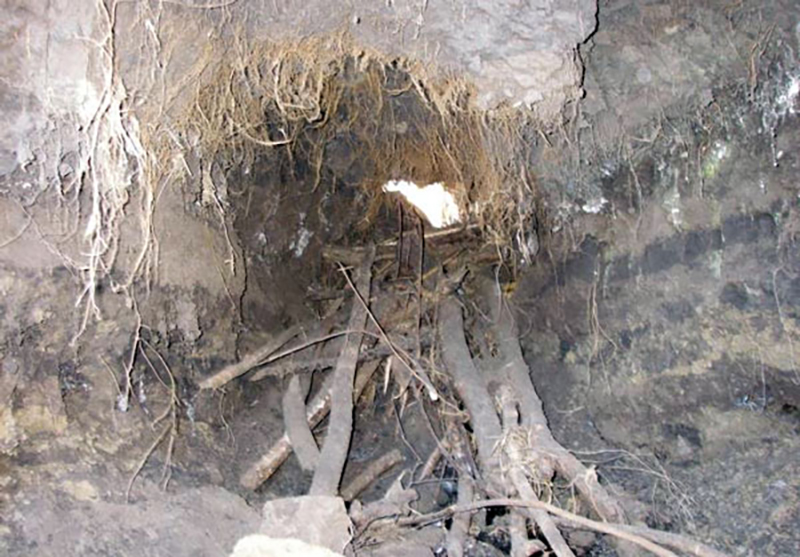
Earth embankment dams and levees are vulnerable to damage from wildlife intrusions and animal impacts. Dams sit where animals want to be: away from development, near water, in varied vegetation. Some species dig burrows, tunnels, and dens for shelter, and predators enlarge those burrows hunting for prey. Herbivores graze the vegetation that protects the embankment. The result is open space on and within the fill that affects how a dam performs. Some effects, such as surface erosion, are easy to see. Others, such as internal erosion, may not show at all until long afterward.
State dam safety officials and federal agencies agree that animal burrows within dams can cause substantial and costly damage if left unmitigated, and that they are a major concern in safe operation and maintenance1. A 2011 review by Bayoumi and Meguid put the annual cost of rodent damage to earthen structures at more than a billion dollars3.
| Group | Species |
|---|---|
| Burrowing rodents | Nutria, muskrat, beaver, moles and voles, gopher |
| Larger diggers | Badger, coyote, armadillo, alligator |
| Grazers | Livestock, geese |
| Small excavators | Crayfish, ants |
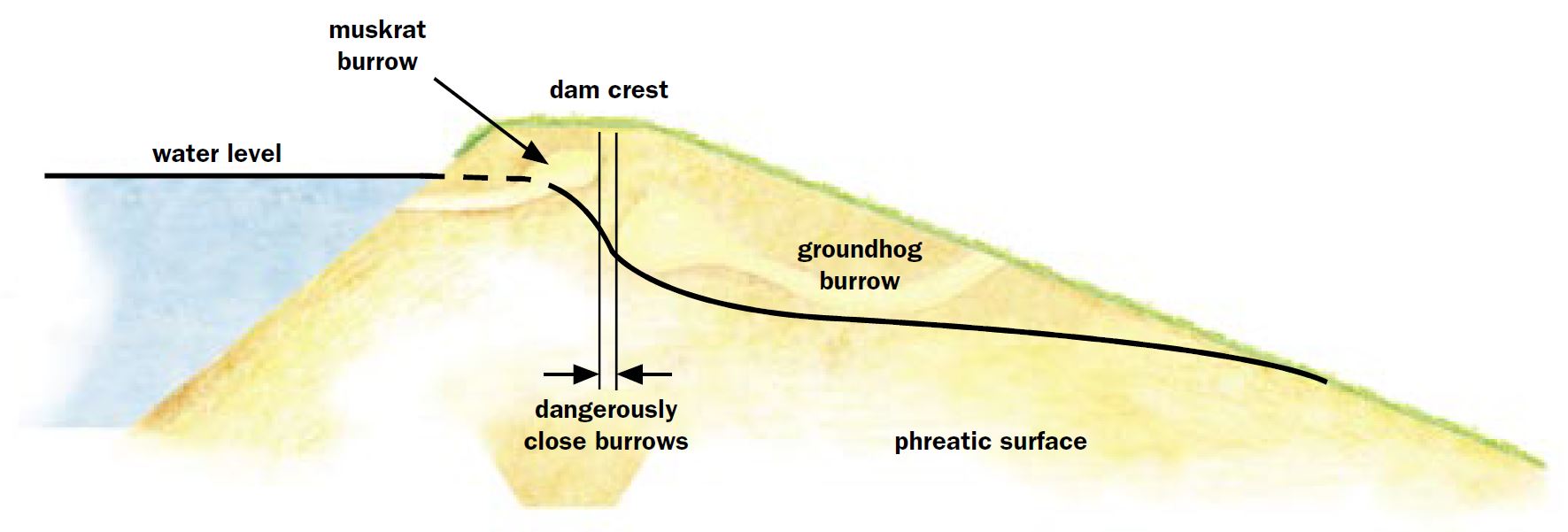
How animal activity damages a dam
Animal activity changes how water moves through and under an embankment, undermines structural integrity, and causes surface erosion.
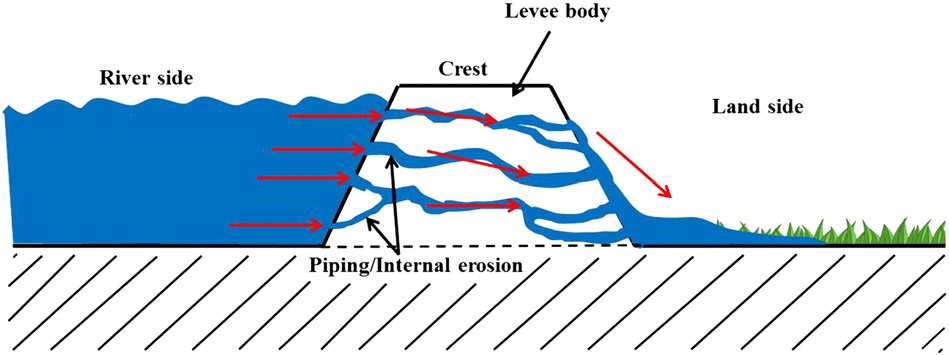
The phreatic surface moves. Burrows anywhere on or around the dam change the water table inside it. Burrows on the upstream face let the reservoir extend into the embankment and raise the phreatic surface. Burrows on the downstream face let it rise and daylight higher on the slope. Both change pore water pressures throughout the embankment. Together these can shorten seepage paths, increase seepage volumes, lower the factor of safety against slope failure, and lead to internal erosion of embankment materials1.
Voids weaken the fill. Dens, burrows, and tunnels create open spaces that weaken the structure and let surface water into the embankment. Rain and snow loosen the soil around a burrow until it collapses. Dens also collapse under heavy equipment and vehicles using the crest as a road. Collapse often forms sinkholes. Owners and operators should note any new sinkhole or depression and address it immediately.
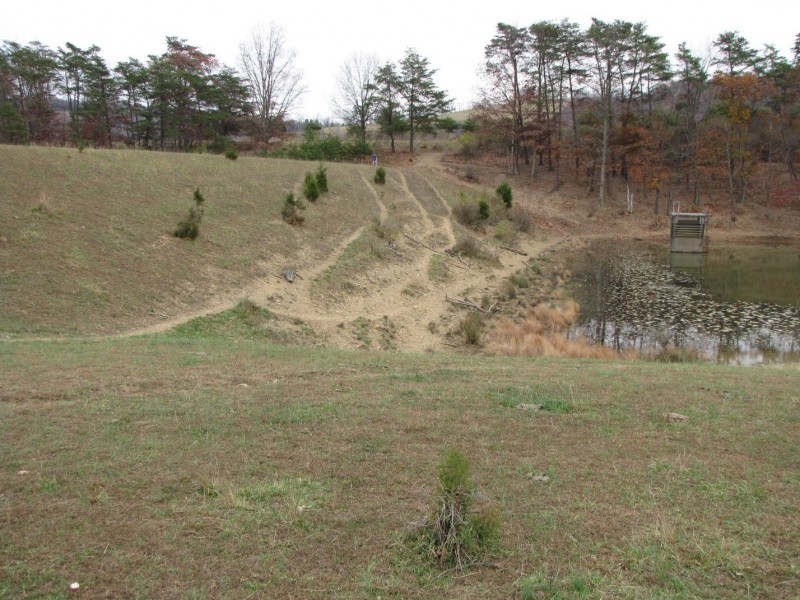
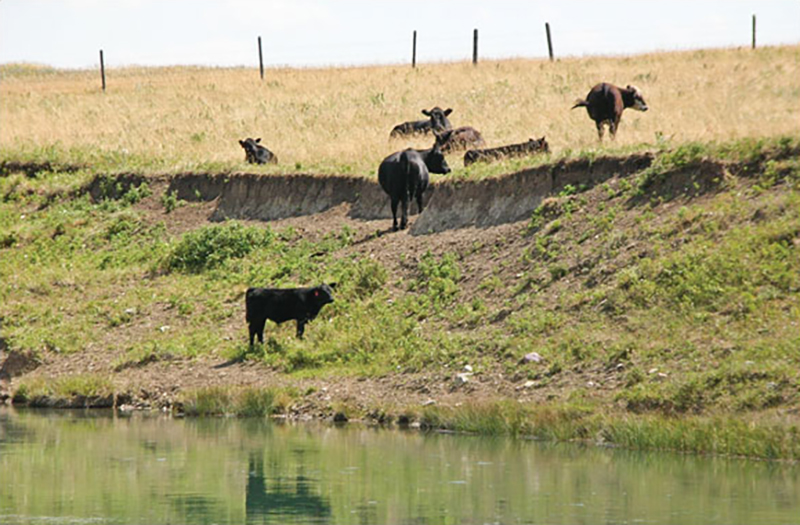
Grazing strips the cover. As animals forage on and around embankments they reduce vegetative cover, which forms preferential flow paths, rills, and gullies along the faces. Livestock should be excluded from earthen embankments. Left alone, livestock trails and surface erosion can contribute to failure modes during storms.
What has already happened
Several failures and incidents trace directly to animals.
| Dam | When | What happened |
|---|---|---|
| Santa Clara Dam, Utah | September 2012 | A flood control dam failed during a storm. Investigation found rodent burrows penetrating through or nearly through the dam. An inspection months earlier had identified active burrows on both slopes. Witnesses saw water flowing from rodent holes on the downstream face as the reservoir rose and fell, and rodents swimming away. Flooding damaged 61 homes and 16 businesses, about $7.5 million in damage |
| Iowa Beef Processors waste pond No. 1, near Richland, Washington | 1993 | A 15-foot embankment released 300 acre-feet of wastewater. State inspections in 1981 and 1985 had found it riddled with burrows and recommended filling them and removing the animals. No repairs were made. Snowmelt raised the reservoir, water entered burrows near the crest, and the dam eroded. The breach washed out Union Pacific track, derailed five locomotives, and cost $5 million1 |
| Sid White Dam, near Omak, Washington | 1971 | An earthen dam failed from seepage through animal burrows. Its failure brought down a second dam, dumping debris into the town of Riverside4 |
| Secchia River levee at San Matteo, Italy | 2014 | A levee failure investigated for the influence of animal burrowing7 |
Inspection
Regular inspection is critical to operating any dam, and it should consider wildlife activity. A typical inspection report comments on vegetation, slope protection, erosion, instabilities, and any animal burrows observed.
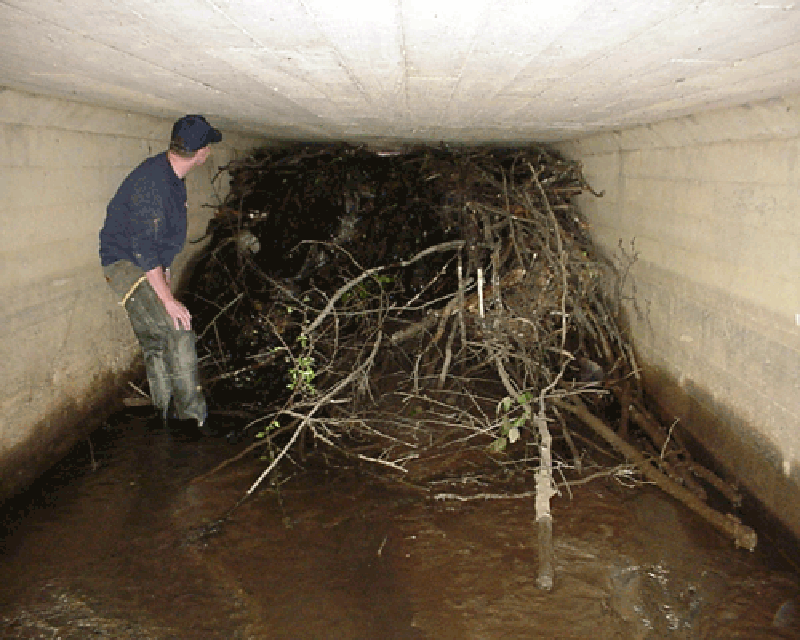
In evaluating animal impacts, look for burrow entrances, mounds of excavated soil, debris that indicates beaver activity, cracks, depressions, erosion, sinkholes, paths, ruts, sloughs, slides, and scarps. Any of these can point to damaging activity. The report should say whether what was found warrants monitoring, repair, or further investigation1.
Best practices
Identify the species first. Mitigation should be aimed at whatever is doing the damage, and more than one species may be at work, so control and prevention may need to address several at once. Consult the state wildlife agency to stay within state regulations1.
Mud-packing is the common way to backfill a burrow in an embankment, and it is simple and inexpensive. Place one or two lengths of metal stove or vent pipe vertically over the entrance of the den. Pour the mud-pack mixture into the pipe until burrow and pipe are full. Remove the pipe and tamp dry earth into the entrance. The mixture is 90 percent earth and 10 percent cement, with water added until it reaches a slurry or thin cement consistency. Plug all entrances with well-compacted earth and re-establish vegetation. Deal with dens without delay: damage from a single hole can fail an embankment6.
Exclude livestock from earthen embankments entirely, and manage vegetation so the surface stays visible and inspectable.
Animals pose a significant threat to the performance and integrity of earthen embankments when their impacts go unaddressed. Safe operation means comprehensive and timely inspection and observation of animal impacts, accurate identification of the species, appropriate mitigation, and prompt repair and prevention.
| Document | Author | Year |
|---|---|---|
| Technical Manual for Dam Owners: Impacts of Animals on Earthen Dams | Federal Emergency Management Agency | 2005 |
| Evaluation and Monitoring of Seepage and Internal Erosion | Interagency Committee on Dam Safety | 2015 |
| Dam Ownership Fact Sheet: Rodent Control | Association of State Dam Safety Officials | 2021 |
| Canal Operation and Maintenance: Animals | U.S. Bureau of Reclamation | |
| Dam Safety Fact Sheets: Information for Dam Owners | Ohio Department of Natural Resources | |
| Guidelines for Landscape Planting and Vegetation Management at Levees, Floodwalls, Embankment Dams, and Appurtenant Structures | U.S. Army Corps of Engineers | |
| Pocket Safety Guide for Dams and Impoundments | U.S. Department of Agriculture | |
| Prevention and Control of Animal Damage to Hydraulic Structures | Paul L. Hegdal and A.J. Harbour | |
| The National Dam Safety Program Research Needs Workshop: Impacts of Plants and Animals on Earthen Dams | FEMA |
Further viewing
- Understanding and Managing Plant and Animal Intrusions in Embankment Dams and Levees, an ASDSO on-demand webinar.
References
- FEMA. (2005). Technical Manual for Dam Owners: Impacts of Animals on Earthen Dams. Federal Emergency Management Agency. PDF
- Calamak, M., Bilgin, G., Demirkapu, H., and Kobal, A. (2017). Effects of burrowing animals on seepage behavior of earthen dams. XVI World Water Congress Proceedings, International Water Resources Association. PDF
- Bayoumi, A., and Meguid, M.A. (2011). Wildlife and safety of earthen structures: a review. Journal of Failure Analysis and Prevention, 11(4). PDF
- Puyallup Tribe of Indians. (2017). Puyallup Tribe of Indians mitigation plan, dam failure hazard. PDF
- Washington State Department of Ecology. (2019). Washington State notable dam failures and incidents. PDF
- ASDSO. (2021). Dam ownership fact sheet: rodent control. Association of State Dam Safety Officials. PDF
- Taccari, M.L., and Van Der Meij, R. (2016). Investigation of the influence of animal burrowing on the failure of the levee of San Matteo along the Secchia river. E3S Web of Conferences, 9.
This lesson was written for the Association of State Dam Safety Officials and peer reviewed by Cory Miyamoto, P.E., California Department of Water Resources, and Mike Hand, P.E., WYOH2OPE.